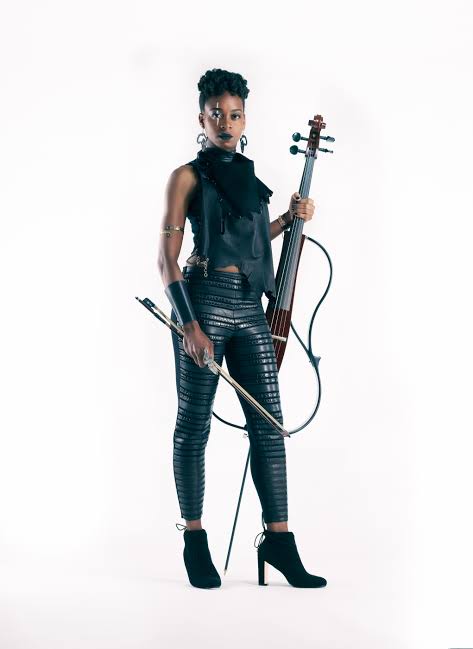
Ayanna Witter-Johnson
Interview
Q: Hello Ayanna! You are about to release a new album.
Yes, the album is finished. It’s called ‘New Roots’ and it’ll be out in Autumn 2026. Some of the recordings were done at The Mine Studio in Tottenham, some were done at home, and some at my drummer’s. I worked with a new mix engineer on this project who has a lot of experience mixing hip-hop and grime, because I wanted my music to hit a bit harder and have more punch. Things have always been very acoustic with me, but I liked the idea of a groove hitting you a bit harder. Saying that, it’s also a body of work that’s full of emotion, so there are very laid-back songs that are stripped down and well as songs you can dance to.
Q: On your debut album ‘Road Runner’, the last song “Unconditionally” is about your mother. Do you remember her reaction when she first heard it?
Well, she has been to so many of my shows over the years it’s difficult to remember when exactly she first heard it but she always cries when she hears it because she knows it’s “her” song. I wanted to write something for her because she was so young when she had me and I am just so impressed with how she created so many opportunities for me to develop as an artist growing up. My mum was part of a Ghanaian dance troupe when I was between four and eight years old, doing concerts and shows in different parts of the country, and always took me with her. I was the dancing kid and soaked up all those amazing West African rhythms that play such a big part of my musical language now. She was also the person who started me on piano lessons, so I see her as the instigator of my musical journey as a whole.
Q: So your mother must have had a strong musical background.
She loves music and she used to play violin and piano at school so she understands the rudiments of classical music as well as what it takes to progress musically in this way. But also the balance of classical with music from the African Diaspora which was a large part of what I listened to growing up - reggae, soul, RnB, Jazz, Latin styles and of course being in the Ghanaian Dance Troupe.
She also had this tape by an African American gospel group called ‘Sweet Honey in the Rock’ and would play it a lot. When they came over to the UK to play a live show, I was three years old and she took me. Whilst I was there I sang along to every single song which was probably very annoying for the rest of the audience (laughs). But my mother noticed I had very good pitch and a good ear and thought, “Oh, we should maybe get her started with some instrumental lessons.” So that was the genesis of my piano study.
Q: How did you end up playing the cello?
My piano lessons began at three and a half years old and by the time I was 11, I had done most of my grade exams and won several competitions. By the time I got to secondary school, I was essentially helping the music teacher teach the other kids basic piano skills. Of course, without getting paid, and my mum didn’t think it was a good use of my time (laughs). So the music teacher thought, “Okay, whilst we are doing this, maybe Ayanna can study a second musical instrument?” I was around twelve and a half years old then and I went home with a list of orchestral instruments to choose from. My mum didn’t want me to play any woodwind, brass or percussion (including drums) instruments. I thought the double bass was a bit big, the violin a bit small and I didn’t know what a viola was, so the cello was left. My art teacher in primary school also played her cello for us once, so I remembered that and thought it was cool.
Q: At that age, people tend to develop a musical taste. What did you listen to?
Apart from classical music from composers like Bach and Debussy (who were my favourites and still are), I was listening to TLC, SWV, and Snoop Dogg. A lot of RnB and Hip-Hop, but also Stevie Wonder, Michael Jackson, Steely Dan, Anita Baker, Brenda Russell and others. Classical music however was a bit of an escape. I liked being on my own and practising the piano. I loved the challenge of having a piece of sheet music, let’s say by Chopin, and focusing on it.
Q: You do a lot on your own and work across many different fields.
I do a lot of solo shows and handle a lot of my own business but I do have support. My publishers (Faber Music) are amazing and my booking agents (Avalanche & Rub Recordings) are incredible. Saying that, I am currently expanding the team to enhance the release of the album in terms of marketing, promotion, touring, the band etc.
In addition to recording, releasing and touring music I do a lot of scoring for TV, theatre and concert hall which is a lot of solitary work and needs to be balanced as you can exhaust yourself crossing the ‘i’s and dotting the ’t’s. I do enjoy exercising my creativity across such a range of musical fields and I’m actively building my portfolio in this regard so there is a lot on my plate which most certainly keeps me on my toes!
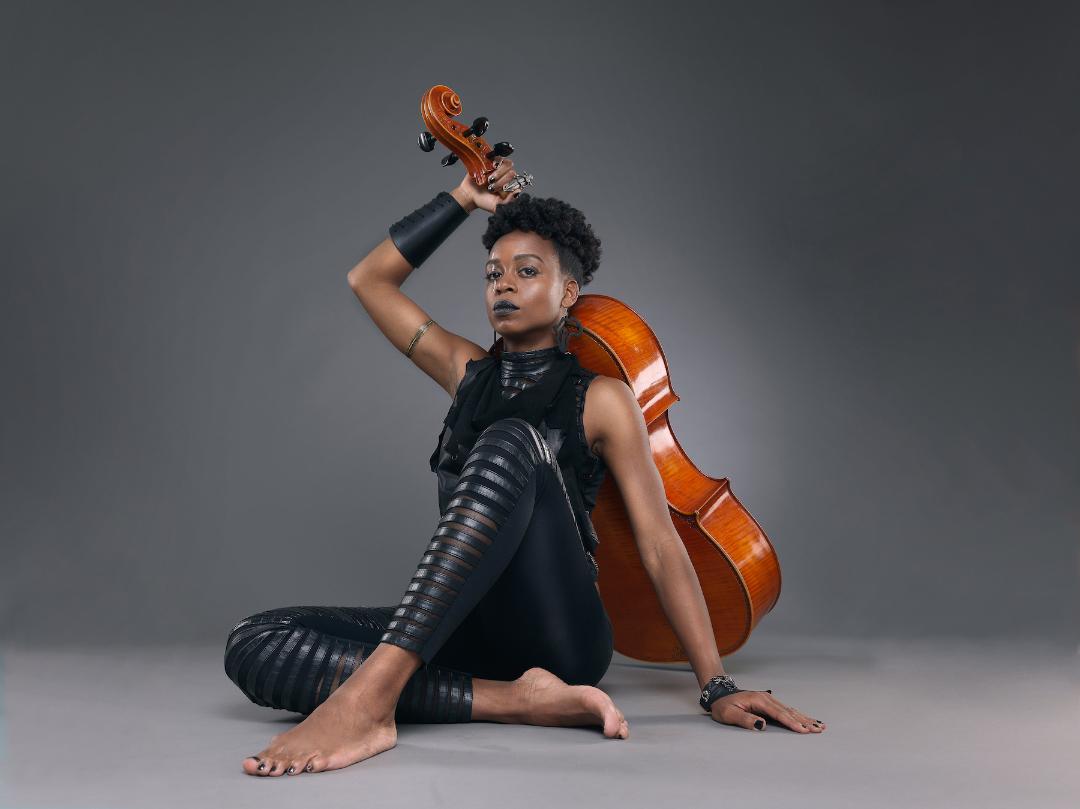
Q: Big names like Peter Gabriel and Anoushka Shankar have hired you as a touring musician. How has that shaped your approach to working with your own band, and which tour did you find most challenging?
I’ve learned it’s important that each musician has the opportunity to shine with their own strengths. On a more practical note - clarity is important and basic things matter. I.e. the band needs to know they will be looked after, be well fed and know what is happening at what time. I’ve been fortunate enough to experience the most beautiful places to stay on tour and have seen parts of the world I may never have on my own. In terms of challenges, Peter’s tour involved a huge amount of music, and the show was long and I put a lot of pressure on myself because the songs are so deeply embedded in the public consciousness. There are superfans whose lives revolve around Peter’s work and I wanted to do the music justice. With Anoushka, at first I thought, “How am I going to play all this?” Especially as I had not played Indian Classical Music before but after a LOT of practice, I started to feel very comfortable in her musical world and super proud of myself for navigating both Western and Indian Classical musical worlds with grace and a fresh sensibility.
Q: How do you reflect on the fame of such big artists?
It is one thing to observe fame from the outside, and another when it is your day-to-day life. Even when it gets extreme, like in Peter’s case, if you are proud of the work you do and it has a positive impact on others, it is something you can manage. If you are famous for reasons you are not comfortable with, I imagine it could feel like being in a constant defensive mode.
If a lot of fame comes my way and I am proud of what I do, and it brings people joy and excitement, I would most certainly embrace that (laughs).
Q: A long time ago, you collaborated with 4 Hero. How did that happen?
I honestly don’t know, and I can’t even quite remember how I met them (laughs). I featured on a track called ‘Give In’ on 4 Hero’s album Extensions around 2009. At that time, I was active in the London jazz scene and doing a lot of performing and playing with other ensembles including in Courtney Pine’s Afropean Warriors Band, so I guess word got round.
Following on from that collaboration, Mark from 4Hero then went on to produce my first EP ‘Truthfully’ which was amazing!
Q: You speak out strongly against racism. Have you experienced attacks on social media from right-wing groups?
No direct abusive attacks thankfully. On a daily basis, I experience racism through micro-aggressions, doors being closed and glass ceilings mostly. I have had some racist comments online but nothing overwhelming in that regard. People’s behaviour is out of my control. I don’t tell people what is right or wrong or what they should or shouldn’t do, I have no right to do that. I simply share and process my own experiences and in many instances it allows some people to feel seen and understood which is also important in building safer communities.
Regarding the broader context of representation in the UK music industry, reports such as the Black Lives in Music study (2021) have highlighted that 63% of Black music creators have experienced direct or indirect racism, and Black women in the industry often face additional barriers regarding pay and mental health support.
Q: If you look back on your career in a few years’ time, what would you like to see?
Ultimately, I would like to see the release of my sophomore album ‘New Roots’ and hopefully my third which will be a collaborative project - a series of duets with artists and musicians that I truly admire. In a few years time I hope to attend the UK premiere of the musical I’m currently writing ‘Clara At The Door With A Revolver’, have composed for several more TV series and have a few world tours of my own music with my band under my belt. I also want to attend a few graduation ceremonies for the ‘Witter-Johnson Rising Star Scholarship Award’ which is now available via London Met Uni to support a Music Technology and Production student who shows exceptional potential. Particularly those from disadvantaged or underrepresented backgrounds. It’s important to me that in everything I do, I can share my experiences and create opportunities for others. The scholarship is open to a Music Technology and Production student who shows exceptional potential, with a particular focus on applicants from disadvantaged or underrepresented backgrounds.
Q: Thanks a lot for your time, Ayanna!
TheSeasideView wants you to see this: